ENERGY STORAGE & INDUSTRY INSIGHTS · 2026-11-21
India's BESS Market Crosses 63 GW: The Future of Energy Storage and Opportunities Ahead
India's Battery Energy Storage System (BESS) pipeline has crossed 63 GW, marking a major milestone in the country's clean energy transition. Explore the latest CEA insights, project execution challenges, and emerging opportunities for solar integration, industrial energy storage, and smarter energy management.
Published by Enerzia Group | Energy Storage & Industry Insights | 21 November 2026
India's renewable energy transition is entering a significant new phase. As solar and wind power installations continue to expand, Battery Energy Storage Systems (BESS) are becoming increasingly important for building a reliable, flexible and sustainable electricity network.
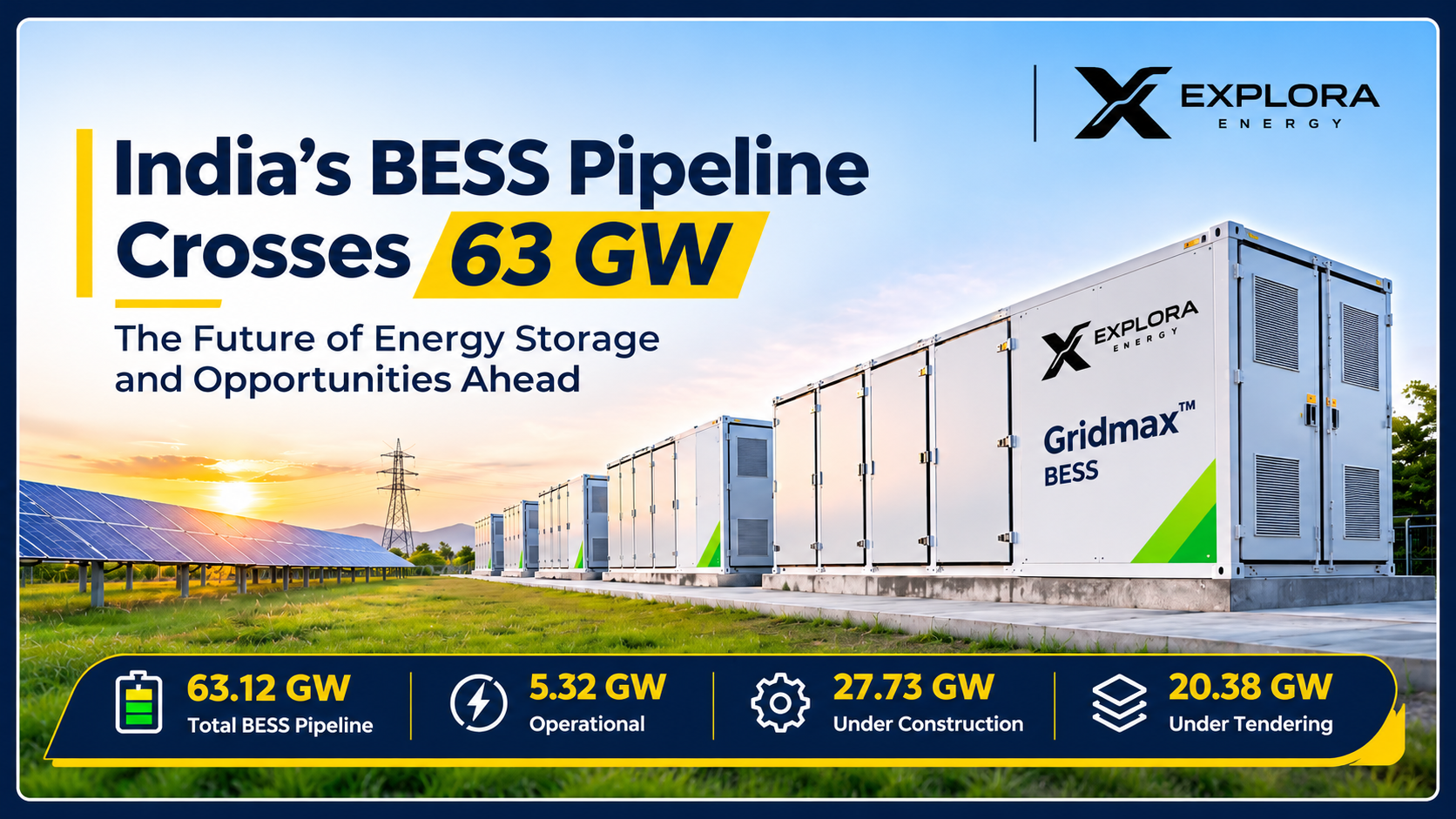
According to the Central Electricity Authority (CEA), India's BESS project pipeline reached approximately 63.12 GW (198.44 GWh) as of 30 September 2026, covering projects in operation, under construction, awarded and under tendering.
However, only around 5.32 GW of this capacity was operational, highlighting both the tremendous opportunity and the challenges ahead for India's energy storage industry.
India's BESS Development: Key Statistics
The latest CEA data presents the following picture of India's energy storage development:
| Project Status | Capacity (GW) | Projects |
|---|---|---|
| Operational | 5.32 | 19 |
| Under Construction | 27.73 | 63 |
| Awarded | 9.70 | 28 |
| Under Tendering | 20.38 | 85 |
| Total Pipeline | 63.12 | 195 |
Source: Central Electricity Authority, Status of BESS Development and Deployment in India, 30 September 2026. Figures rounded.
The figures reveal an important industry trend: India's energy storage market is moving from project announcements and procurement towards large-scale implementation.
Nevertheless, almost one-third of the identified pipeline remains in the tendering stage, demonstrating the importance of timely contracting, engineering readiness, financial viability and project execution.
Why Battery Energy Storage Is Critical for India's Energy Future
Renewable energy generation is naturally variable. Solar plants generate electricity primarily during daylight hours, while wind generation depends on weather conditions.
Battery Energy Storage Systems help address this challenge by storing electricity and releasing it when required.
Key applications include:
1. Renewable Energy Integration
BESS can store surplus solar and wind generation and deliver electricity during periods of reduced renewable output.
2. Peak Demand Management
Commercial and industrial consumers can potentially reduce peak grid demand by discharging stored energy during high-load periods, subject to their tariff structure and operating profile.
3. Improved Energy Reliability
Properly engineered battery storage systems can support critical operations during supply interruptions when configured with suitable backup and islanding capabilities.
4. Grid Stability and Flexibility
Utility-scale storage can provide fast-response services that help balance electricity supply and demand.
5. Energy Cost Optimisation
Where electricity tariffs, demand charges and operating conditions are favourable, BESS can support energy cost management through load shifting and intelligent energy dispatch.
The 20.38 GW Tendering Challenge
One of the most significant findings in the CEA report is the approximately 20.38 GW of capacity remaining under tendering.
This represents a substantial development opportunity, but tender-stage projects should not be treated as confirmed installations.
Moving these projects into operation requires several critical steps, including finalisation of commercial agreements, financing, grid connectivity, engineering design, equipment procurement and commissioning.
Battery storage projects also require careful consideration of safety systems, thermal management, battery degradation, performance guarantees and long-term maintenance.
As the industry matures, project quality and lifecycle performance will become just as important as initial equipment cost.
Opportunities for Commercial and Industrial Consumers
Although large utility-scale projects dominate national BESS development discussions, energy storage also presents opportunities for commercial and industrial facilities.
Factories, warehouses, logistics centres, data centres and commercial buildings can evaluate battery storage for applications such as:
- Solar energy storage and improved self-consumption
- Peak-load management and demand optimisation
- Critical-load backup and operational continuity
- Time-of-use electricity cost optimisation
- Integrated solar, battery and energy management systems
However, the financial attractiveness of each application depends on electricity consumption patterns, applicable tariffs, battery costs, efficiency, cycling requirements and system life.
A detailed technical and financial feasibility study is essential before selecting a storage solution.
Solar Plus BESS: Towards Smarter Energy Infrastructure
Solar photovoltaic systems and battery storage technologies complement one another.
Solar installations generate renewable electricity, while BESS provides flexibility in determining when that electricity is consumed.
When integrated with intelligent Energy Management Systems (EMS), these technologies can help organisations monitor generation, analyse demand, schedule battery operation and improve energy utilisation.
For industrial customers, an integrated approach involving solar PV, energy storage, electrical infrastructure and energy monitoring may provide a more effective long-term strategy than evaluating each technology independently.
Enerzia's Perspective: Engineering the Next Phase of Clean Energy
At Enerzia Group, we believe India's clean energy transition requires more than the installation of renewable energy equipment. It requires reliable engineering, intelligent integration, quality execution and sustainable long-term performance.
Building on our experience in electrical engineering, power infrastructure and industrial solutions since 2010, Enerzia is expanding its focus towards renewable energy and advanced energy storage technologies.
Through Enerzia Solar, our renewable and clean energy initiative, we are developing solutions for residential, commercial and industrial energy applications.
In parallel, Explora Energy represents our emerging energy storage product initiative, with a focus on exploring practical, scalable and intelligent battery storage technologies.
Our direction is to connect renewable generation, energy storage and smart energy management into integrated solutions that address real customer requirements.
Looking Ahead: From Energy Generation to Energy Intelligence
India's 63 GW BESS project pipeline demonstrates the growing importance of energy storage in the country's power sector.
However, the next phase of progress will depend on how successfully proposed and awarded projects are converted into safe, reliable and commercially sustainable operating assets.
For businesses, the opportunity is equally significant: energy management is evolving beyond purchasing electricity towards actively controlling when energy is generated, stored and consumed.
The future of energy is not only about generating cleaner power. It is about using every unit of energy more intelligently.
At Enerzia, this direction reflects our guiding philosophy:
Think Smarter. Go Greener.
Explore Smarter Energy Solutions with Enerzia
Are you planning a solar installation, evaluating battery energy storage or exploring ways to optimise your facility's electricity consumption?
Connect with Enerzia to discuss your energy requirements and potential engineering solutions.
Enerzia Group | Renewable & Clean Energy Solutions
Website: www.enerzia.com
Solar Solutions: www.enerziasolar.com
Email: info@enerzia.com
References
- Central Electricity Authority (CEA), Status of Development and Deployment of Battery Energy Storage Systems in India as on 30 September 2026.
- Saur Energy, India's BESS Pipeline Crosses 63 GW, But 20.38 GW Remains Stuck in Tendering, 17 November 2026.